How orchestration works
From static processes to adaptive flows
In an orchestrated environment, processes are no longer fixed sequences. They respond to events, data and decisions as they happen.
Take onboarding as an example. Identity verification, fraud checks and compliance validations are no longer separate steps handled across different systems. They are coordinated within a single flow, running in parallel where applicable.
If a discrepancy appears, the process adjusts. It may trigger additional checks, reroute tasks, run sub processes or introduce human intervention at the right moment. The result is not just automation, but resilience.
Turning intelligence into actionable events
AI is becoming a standard part of financial services, but its value depends on what happens next. Insights alone are not enough.
Orchestration ensures that those insights lead to outcomes. Alerts are routed, decisions are applied and workflows continue without interruption. Instead of isolated signals, AI becomes part of a coordinated process.
In simple terms, AI generates insight and orchestration ensures that the right actions are taken.
Where orchestration applies
Unlocking the value of existing systems
Most financial institutions are not replacing their old core systems, nor do they need to. These systems still provide critical capabilities, but they were not designed for today’s level of connectivity and change.
Orchestration makes it possible to build around them. Existing systems are exposed, connected and coordinated within new workflows, without disrupting what already works.
This “wrap and extend” approach allows banks to innovate faster while keeping risk under control. It turns legacy systems from constraints into active components of modern processes.
What orchestration improves
Get your processes aligned
Orchestration also addresses a less visible challenge: the gap between business intent and technical execution.
By defining workflows and decision logic in a shared layer, we create a common language between business and IT. Processes become understandable and executable, reducing misalignment and accelerating delivery.
Over time, this enables more scale in managing business processes. Capabilities can be reused across the organization, creating consistency while reducing effort.
The clear benefits of orchestration
They who adopt orchestration are not simply improving efficiency. They are changing how they operate:
-
Faster time to market for new products and services
-
Improved compliance through embedded controls and traceability
-
Reduced operational complexity across systems and processes
-
Greater visibility into end-to-end workflows
-
Stronger alignment between business and technology teams
-
The ability to scale innovation without increasing fragmentation
These gains do not come from adding more systems, they come from making good use of the ones already in place.
A strategic advantage
As financial ecosystems continue to evolve, the ability to coordinate systems, processes and partners becomes critical. APIs, embedded finance and regulatory demands all require systems to work together seamlessly.
Orchestration provides the foundation for this. It does not replace existing systems, it makes them work together as one.
That is why orchestration is no longer just an architectural choice. It is becoming a strategic capability for financial institutions that want to remain agile, controlled and positioned for the future.
Want to explore further?
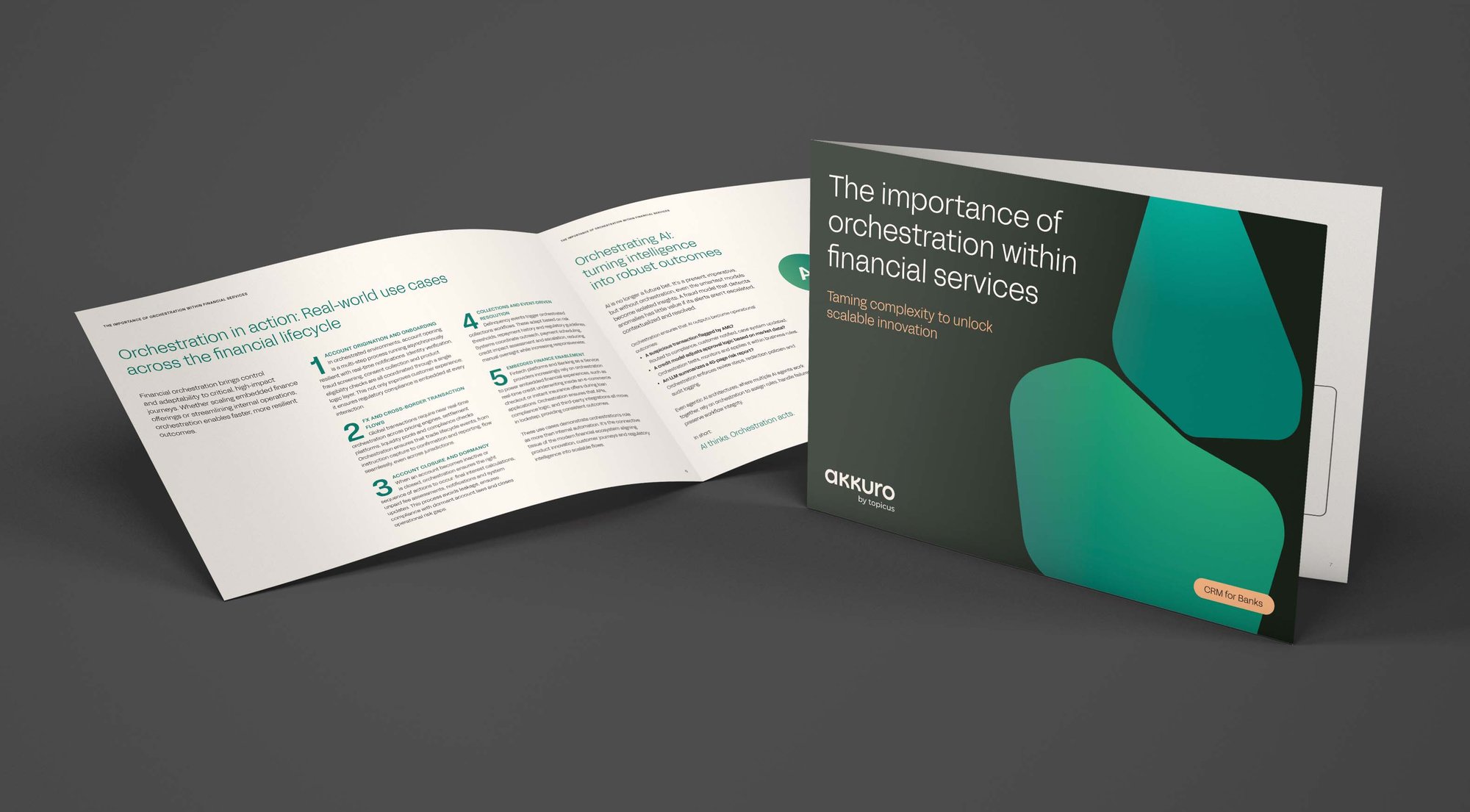
The Importance of Orchestration takes a deeper look at how orchestration transforms legacy systems and enables scalable financial ecosystems through AI.
Complete the form below to read the full report.

 Connect with Bjorn